
1 Introduction
Car sharing is sustainability
The Mobility Cooperative attaches great importance to sustainability – and has done for almost three decades. After all, our mission declares:
“As a cooperative, we are committed to our founding principles. Accordingly, we provide our community with sustainable mobility – as an ecological and economical alternative to private cars.”
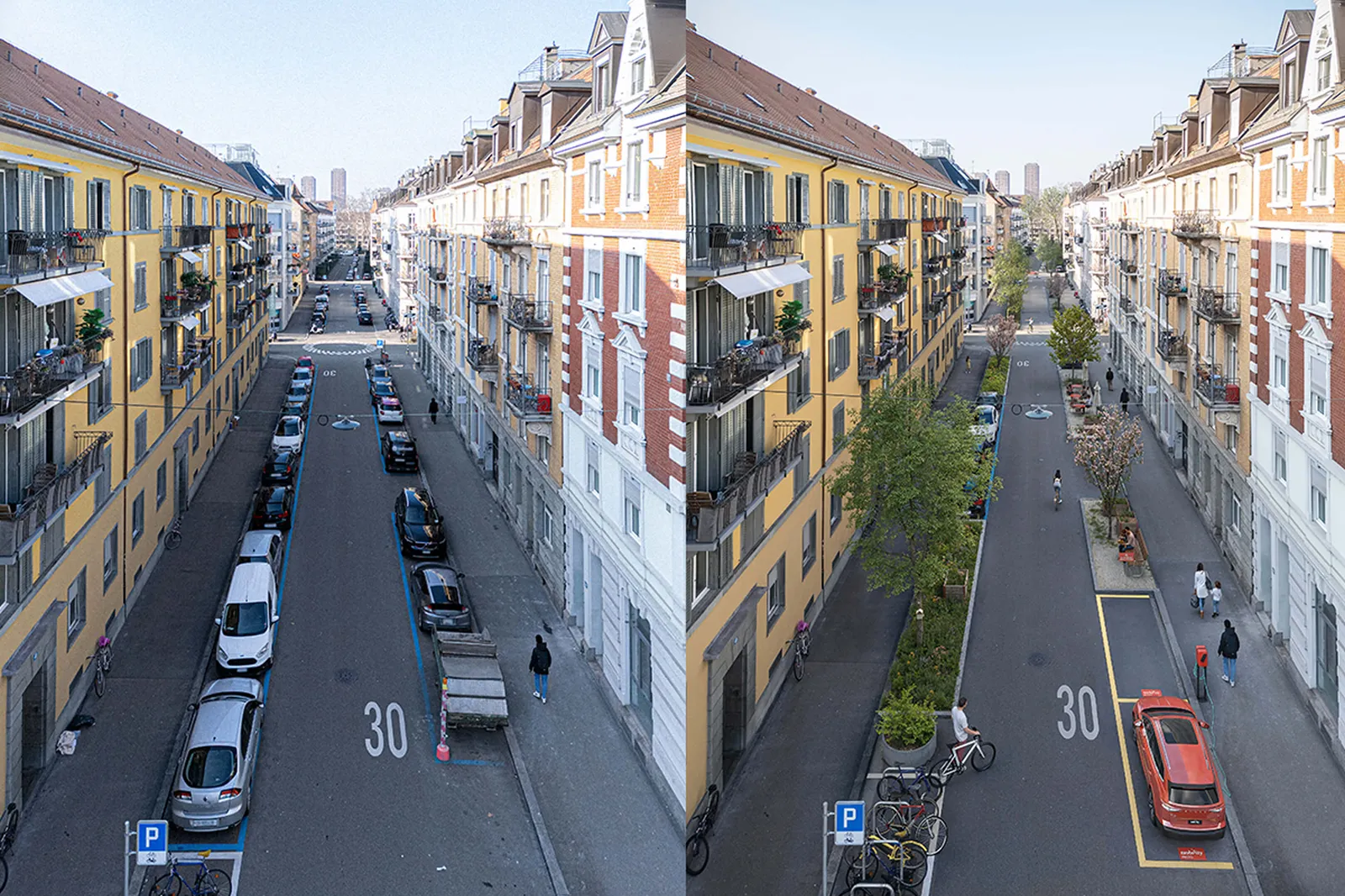
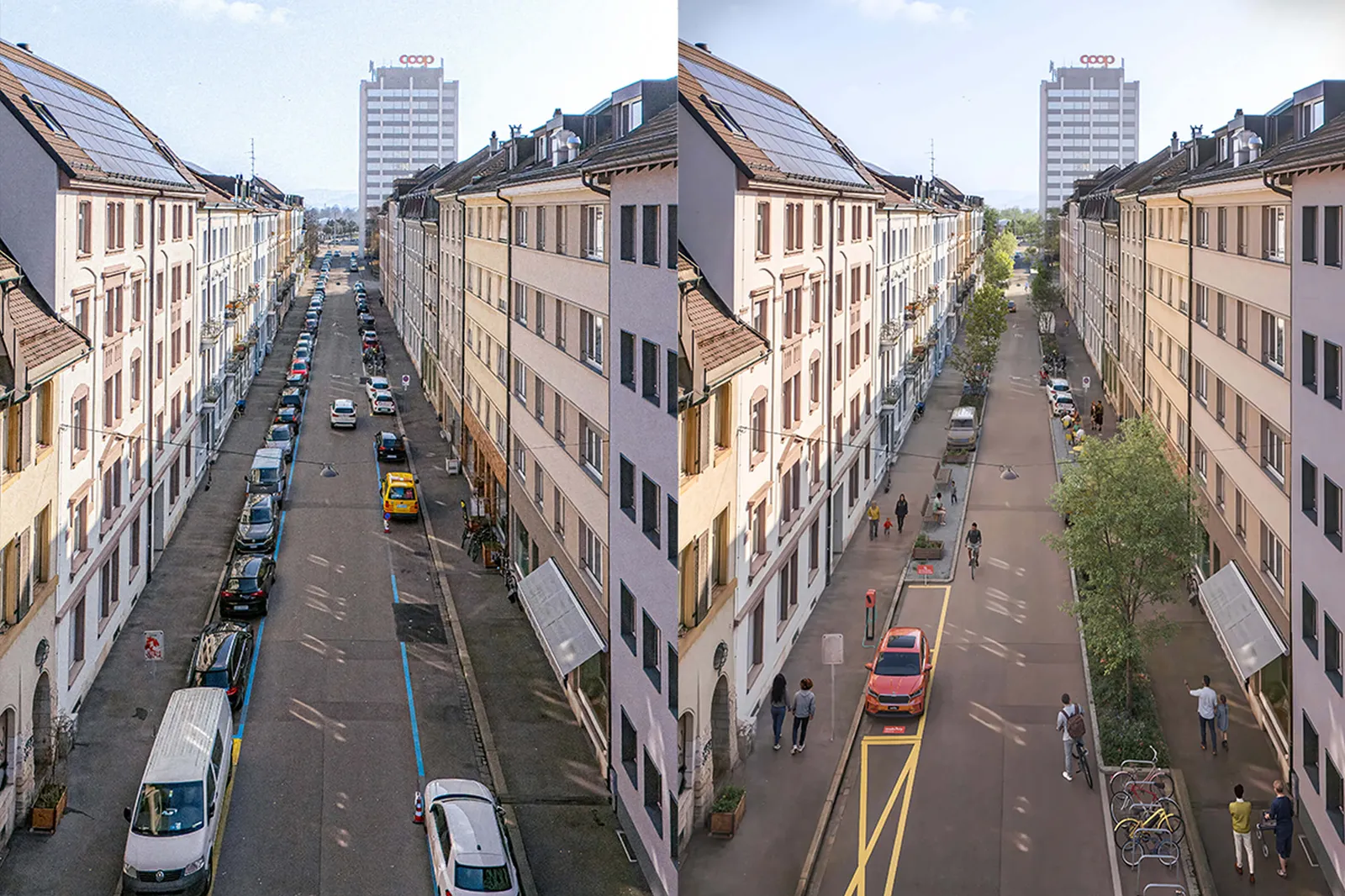
Shared mobility is an important part of the solution to making our world more sustainable. Ultimately, more than a third of CO₂ emissions in Switzerland come from transport (excluding international aviation). Car sharing reduces emissions, creates space and eases traffic. This is because one Mobility car replaces an average of 18 privately owned cars. It is therefore important to scale this effect.
One measure to achieve this is to integrate car sharing more firmly into corporate mobility concepts. 5'700 business customers now rely on Mobility. Their employees can now very easily switch back and forth between private and business use.
Corporate mobility in Switzerland can and should become even greener. This is why Mobility was one of the first companies to join the MoveSmart initiative at the end of 2025. By signing the initiative's charter, we are committing ourselves to promoting sustainable forms of mobility within our company.
Mobility’s goal is clear: net zero by 2040. Our greatest lever here is the switch to electric cars. Not overnight, but gradually. We already have 707 electric vehicles out on the road. While it is true that some customers still have reservations about electric cars, these are gradually diminishing – not least thanks to our community members, who support one another.
We hope you enjoy reading the following Environment Report for 2025.
2 The Mobility effect
The sustainable impact of car sharing
Mobility wants to significantly expand its car sharing service over the next few years so that many more people can benefit from shared mobility and change their behaviour – for the benefit of the environment. Because one thing’s for sure: a private car consumes a lot of resources during production and occupies valuable public space, yet remains unused for an average of 23 hours a day.
Car sharing, on the other hand, is part of a circular economy and has many proven positive effects.
1 to 18
On average, one Mobility car replaces 18 private cars. Extrapolated, this equates to 40'000 vehicles in Switzerland. Click here for the study.
Degree of motorisation
73 per cent of Mobility users live in a car-free household. Furthermore, 15 per cent said that they have got rid of at least one car thanks to the Mobility service.
0%
1:0
Mobility behaviour
People who use car sharing services travel by car less frequently. 92 per cent of Mobility users have a public transport subscription. And according to the German Car Sharing Association (Bundesverband Carsharing), a third of German car sharing customers use bicycles more often, 40 per cent use buses and trains more often and 70 per cent travel by car less often. A well-supplied car sharing service promotes sustainable mobility. This is why Mobility is continuing to expand its locations.
CO2 emissions
The Mobility fleet uses 20 per cent less fuel than the average for Swiss cars. The CO₂ emissions generated by our cars (not including vans) are also significantly lower, averaging 86.2 g/km in 2025 (previous year: 92.6 g/km). By comparison: the average CO₂ emissions from new cars in Switzerland in 2024 was 113.9 g/km.
0
0


3 Cause We Care
Customers investing in climate protection
For several years now, Mobility customers have been able to voluntarily pay a climate contribution. After all, shared mobility also causes CO₂ emissions. For every kilometre driven, customers can donate three centimes to the “Cause We Care” programme, and Mobility doubles the amount to six centimes.
Many Mobility customers opt in: in the 2025 fiscal year, they paid a climate contribution for 43 per cent of all kilometres driven. As a result, Mobility and its users together contributed CHF 1.3 million to the “Cause We Care” fund last year.
0
0%
Fund invested in electrification and two projects
The myclimate foundation monitors the funds to ensure donations are used as intended. Mobility invests three quarters in operational sustainability and one quarter in national and international climate protection projects.
One focus is on electrifying the car sharing fleet. Mobility is aiming to convert all its vehicles to electric drive systems in the coming years. In doing so, the cooperative will significantly reduce its CO₂ emissions and edge closer to its goal of achieving net zero.
Through myclimate, Mobility also supports two projects: one in Switzerland and one in Madagascar. In Madagascar, the organisation ADES has been promoting the use of solar and energy-saving cookers since 2001. These reduce the consumption of wood and charcoal and counteract deforestation. In Graubünden, Mobility is funding climate-optimised forest management in the Prättigau/Davos region. By voluntarily foregoing the use of wood, more CO₂ is stored in the forest.
How to donate
Anyone wishing to make a climate contribution during their car sharing journeys can do so via the Mobility app, for example, by clicking the “Cause We Care” box. An additional three centimes per kilometre will then be charged from the current journey onwards. Alternatively, you can select general additional billing under “Additional services” in the customer portal accessible via the website.

Ricardo Perrini — SHIFT MANAGER 24H SERVICE CENTER
“I enjoy working at Mobility because I think the idea of shared mobility is important and future-oriented.”
4 Mobility’s greenhouse gas balance
More transparency thanks to new methodology
Mobility prepares an annual greenhouse gas balance in order to systematically record its own climate impact and reduce it in a targeted manner. In 2025, the methodology was further developed in collaboration with myclimate and the database improved. We now report our greenhouse gas balance in accordance with the minimum boundaries in line with the GHG Protocol. For example, emissions associated with vehicles are no longer attributed to fuel emissions using statistical averages but are included in the scope 3 categories “Capital goods” (category 2) and “End-of-life treatment of sold products” (category 12). As a result, our company can reflect the emissions we actually cause more fully and honestly.
Last year, Mobility was responsible for 18'512 tonnes of CO₂e*. Compared to the previous year, this is an increase of 7'121 t CO₂e. Part of this increase is attributable to the methodological adjustment. At the same time, Mobility’s growth had an impact on these figures, which reflect the larger fleet of vehicles as well as the increase in the number of kilometres driven by our customers.
* CO₂ equivalents (CO₂e) are a unit of measurement used to standardise the climate impact of various greenhouse gases. Alongside carbon dioxide (CO2), the main greenhouse gas caused by human activities, there are other greenhouse gases such as methane and nitrous oxide.
0
0
Scaling sustainable mobility
Mobility continues to pursue the goal of systematically reducing emissions, while at the same time increasing the impact of shared mobility. Car sharing is inherently a resource-saving mobility model: “More car sharing and fewer private cars have a direct positive effect on the resulting emissions from (individual) motorised transport,” says Roland Beyeler. Because, on average, one Mobility car replaces 18 private cars. The more people share existing vehicles instead of owning their own cars, the greater the contribution to more efficient and space-saving mobility. For Mobility, growth is therefore not an end in itself, but part of our sustainability logic. Mobility’s Head of Sustainability adds: “Growth can lead to higher absolute emissions in Mobility’s own greenhouse gas balance. However, this is not a contradiction, but a sign of the fact that sustainable mobility is being scaled up.”
«More car sharing and fewer private cars have a direct positive effect on the resulting emissions from (individual) motorised transport.»

Grow, scale and electrify
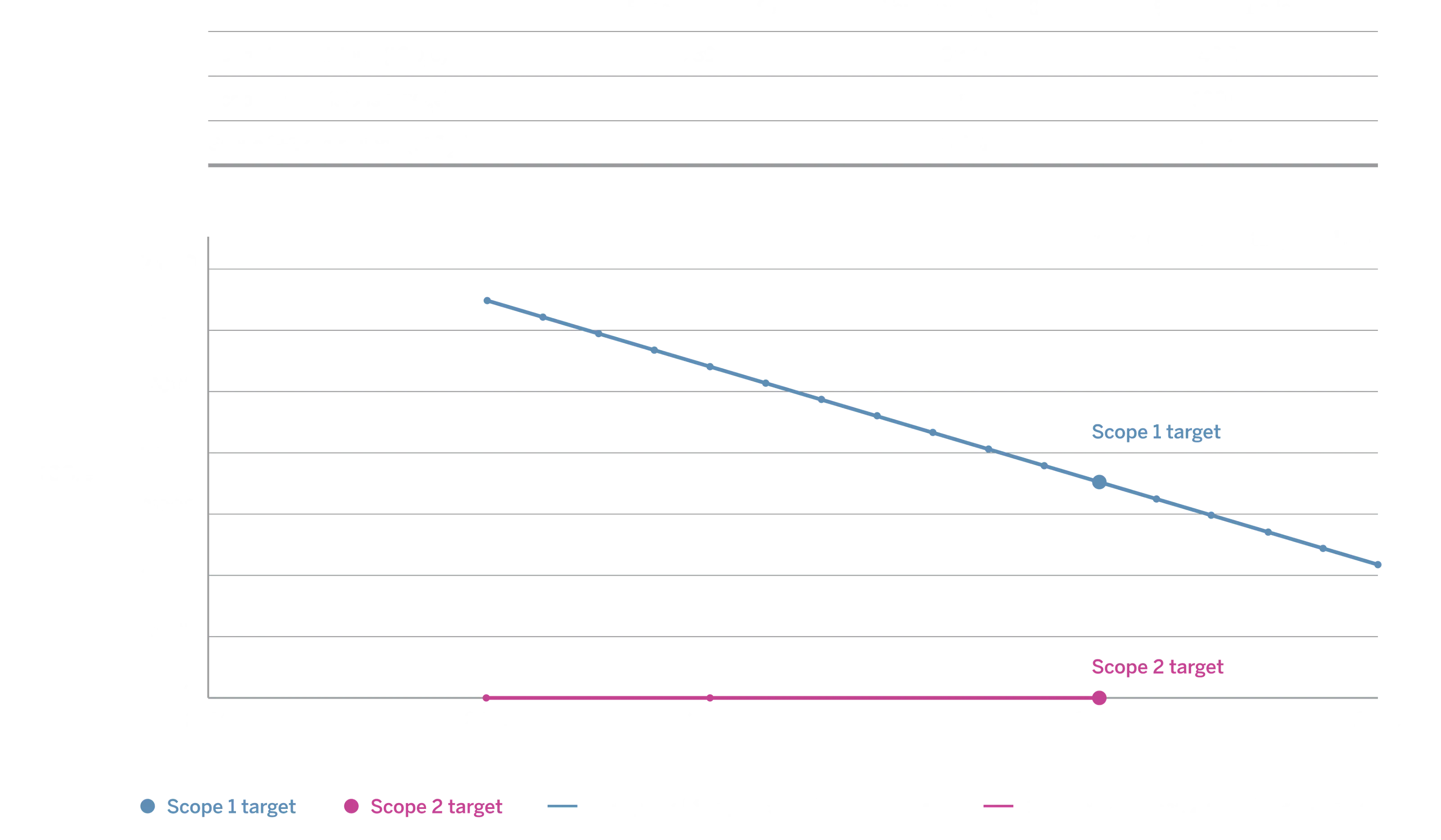
Three years ago, Mobility joined the Science Based Targets initiative (SBTi) and committed to the goal of halving its own emissions by 2030 compared with 2019. The cooperative is therefore continuing to work to reduce emissions where the leverage is greatest: in its fleet, in electrification and in reinforcing a mobility model that replaces ownership with sharing. In this way, Mobility is combining its climate responsibility with its aspiration of making sustainable mobility accessible to more and more people.
SBTi: more than 260 Swiss companies are taking part
The Science Based Targets initiative is an established standard for corporate climate targets. More than 11'500 companies around the world have joined the initiative, including more than 260 in Switzerland. Among other things, the companies undertake to disclose their annual emissions to the public. Find out more about SBTi here.
Source: SBTi

Mirjam Kara — SALESFORCE TECHNICAL CONSULTANT
“I appreciate the open discussions within the team and the honest, respectful collaboration – this creates a working environment where you feel at ease.”